From Singularity to Structure
Bridging the gap between subatomic quantum physics and galactic-scale gravitation.
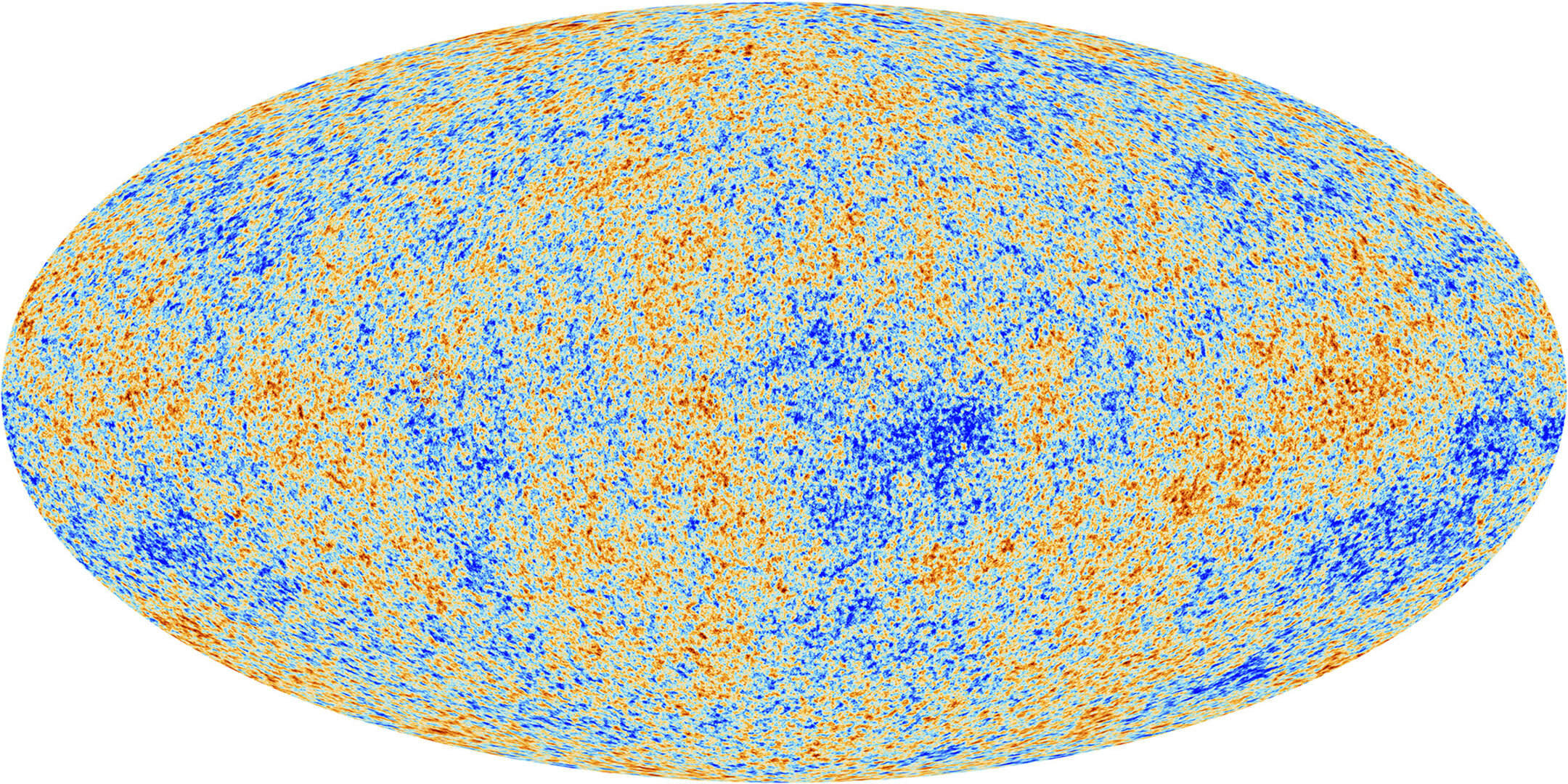
Image: ESA/Planck Collaboration
The Methodology of Cosmic Expansion
The greatest challenge in modern cosmology is multi-scalability. Our architectural approach enables researchers to couple the quantum physics of the primordial universe with the complex gravitational dynamics of galaxy clusters.
Logic Layer: Phase -> Methodology -> Outcome
| Research Phase | HPC / AI Methodology | Scientific Outcome |
|---|---|---|
| Big Bang Era | Monte Carlo simulations for particle interactions at extreme energy densities. | Thermal History Reconstruction |
| The Dark Ages | Hydrodynamic Adaptive Mesh Refinement (AMR) of primordial gas clouds. | First Stars (Population III) Insights |
| Parameter Search | Bayesian Neural Networks for Likelihood analysis of cosmological parameters. | Hubble Tension ($H_0$) Resolution |
Quantum Scaling
Calculating the influence of subatomic fluctuations on the early distribution of matter.
Gravitational Coupling
Simulating massive-scale N-body structures across galactic manifolds.
AI Surrogates
Replacing traditional compute-heavy solvers with high-speed neural emulators.
Institutes Leading Multiscale Cosmology
These institutions build the computational frameworks and surveys that connect the earliest universe to the structures we see today:
Voices from the Field
Researchers working across the scales of cosmic evolution share their insights in recent interviews:
Hendrik Hildebrandt
Ruhr University Bochum
On why the distribution of matter in the universe could challenge the standard model of cosmology.
Read interviewTorsten Enßlin
Max Planck Institute for Astrophysics
On how the Planck data reveal the origins of the cosmic microwave background.
Read interviewSherry Suyu
Technical University of Munich / MPA
On using a rare lensed supernova to help resolve the Hubble tension.
Read articleEleonora Di Valentino
University of Sheffield
On what the persistent Hubble constant discrepancy could mean for the standard cosmological model.
Read article