Coastal Protection & Carbon Research
Turning scattered pCO2 readings into a global map of where the ocean is quietly absorbing our emissions.
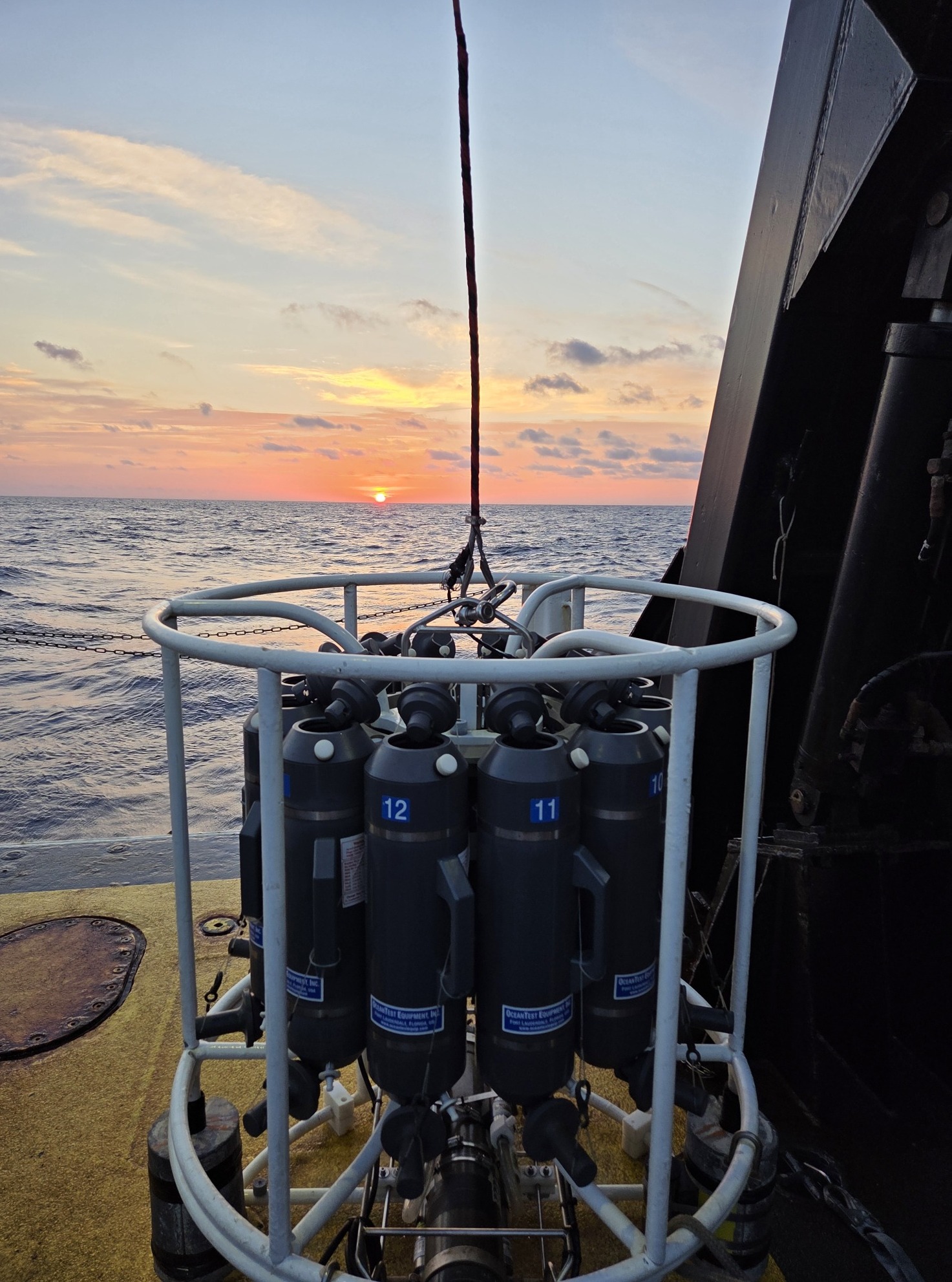
Image: Cassia Busch, USGS
From Sparse Measurements to a Global Carbon Sink Map
Direct pCO2 measurements cover only a small fraction of the world's oceans, with the Southern Ocean especially undersampled. Reconstructing a complete global field means combining satellite data, autonomous floats, and even citizen-science sailboat measurements through GPU-accelerated Optimal Interpolation and machine learning — while simultaneously running storm-surge digital twins that give coastal megacities real-time warning of sea-level hazards. Malgukke's architectures are built to run both workloads on the same GPU-dense infrastructure without one starving the other of bandwidth.
HPC Solution Architecture: Sparse Data to Carbon Budget
A machine-learning-assisted pCO2 reconstruction pipeline, comparable to GEOMAR/MPI-M workflows:
Running on the TOP500: Levante
Levante — German Climate Computing Center (DKRZ), Hamburg
Levante is ranked No. 164 on the November 2025 TOP500 list. It is the shared computing backbone for the MPI-OM/HAMOCC ocean biogeochemistry model used by MPI-M and GEOMAR to build the global pCO2 maps behind the marine carbon-sink estimates described on this page — including the sailboat-augmented reconstructions published in 2026.
Yes — this is a real, currently operating TOP500-ranked system, directly used for the carbon-sink reconstruction workflow described here.
Voices from the Field
Researchers improving global estimates of the ocean's carbon uptake:
Jacqueline Behncke
GEOMAR Helmholtz Centre for Ocean Research Kiel (formerly MPI-M)
On using machine learning and citizen-science sailboat data to correct systematic underestimates of the Southern Ocean carbon sink.
Read articleToste Tanhua
Marine Chemist, GEOMAR / Co-Coordinator, GLODAP
On how research-vessel expeditions and long-term observatories built the global ocean carbon dataset (GLODAPv2) underlying today's carbon-sink models.
Read article